How Event Timing Aligns Promotional Access with User Activity Cycles at Regulated Digital Platforms
Harper Perry · Oct 2, 2026
How Event Timing Aligns Promotional Access with User Activity Cycles at Regulated Digital Platforms
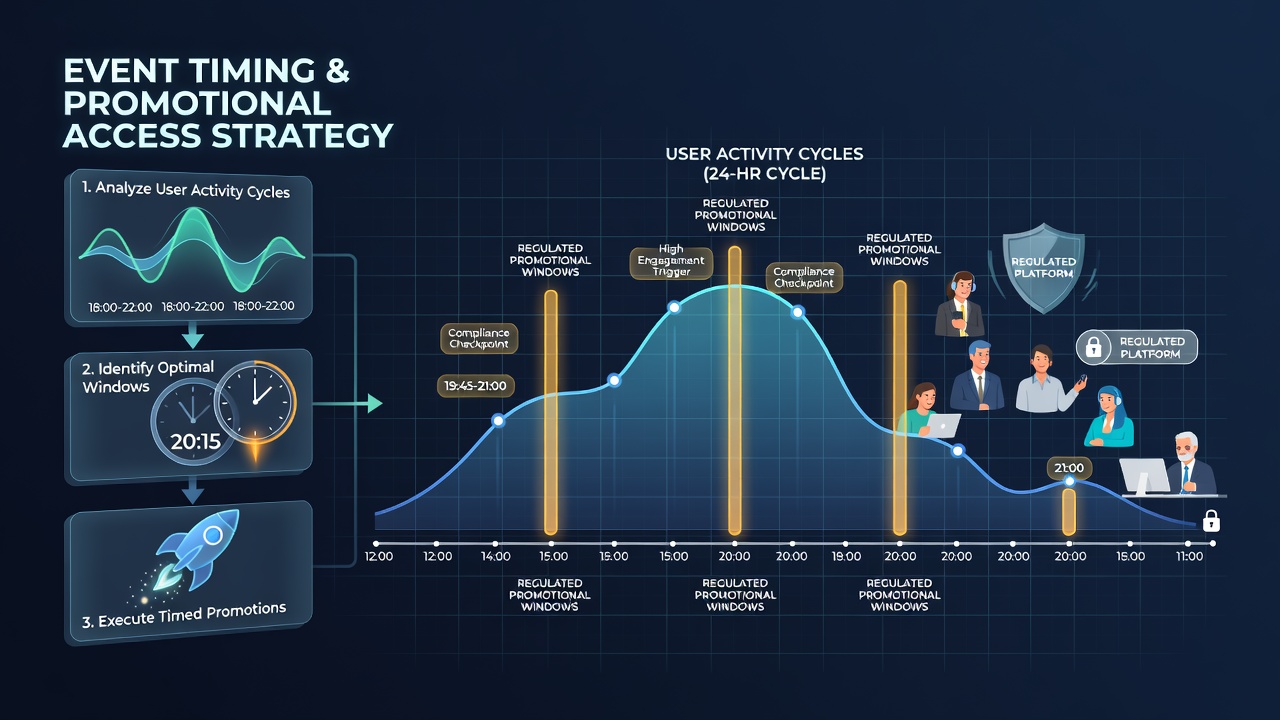
Regulated digital platforms coordinate promotional access with documented patterns in user engagement, and operators draw on aggregated data that tracks login frequency, deposit timing, and session duration across different time zones and calendar periods. These alignments often coincide with major sporting calendars, holiday weekends, and regional regulatory windows that open or restrict certain incentive structures. Observers note that activity cycles tend to intensify during evening hours in North American markets while shifting toward midday in European jurisdictions, which prompts platforms to adjust bonus availability accordingly.
Mapping Daily and Weekly User Patterns
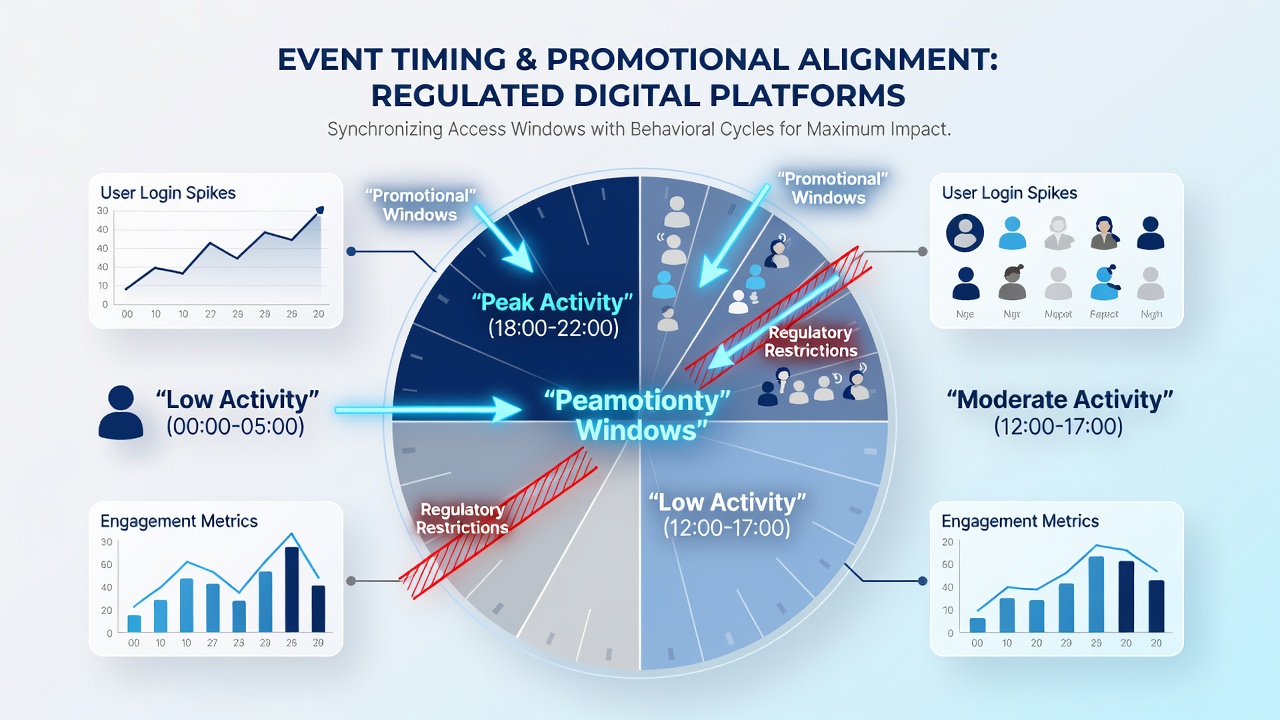
Traffic analysis from multiple licensed operators reveals consistent peaks between 6 PM and 11 PM local time on weekdays, whereas weekends show broader distribution from late morning through late evening. Platforms use these observations to schedule deposit-match offers and free-spin releases so that notifications reach users when they already demonstrate higher login rates. Data collected across 2025 and into 2026 indicates that Thursday through Saturday windows capture teh largest share of new deposits when paired with time-limited promos, while Sunday evenings see elevated cash-out activity that operators sometimes counter with retention incentives.
Event-Driven Timing and Seasonal Shifts
Major sports events create predictable surges that operators exploit through pre-event and in-play promotions. The start of the NFL season in September and subsequent October matchups in 2026 generate documented increases in both new and returning accounts, and platforms time reload bonuses to activate roughly 48 hours before kickoff. Similar patterns appear around international soccer tournaments and horse-racing festivals, where operators in regulated markets release targeted offers that expire within the same 72-hour window as the event itself. One study of Ontario iGaming traffic showed that promotional redemptions climbed 34 percent when offers launched two days ahead of marquee games rather than on the day of the event.
Regulatory Windows and Compliance Scheduling
Licensing bodies impose reporting deadlines and blackout periods that further shape when promotions can appear. The New Jersey Division of Gaming Enforcement requires advance notification for certain bonus structures, which encourages operators to finalize campaign calendars weeks in advance. In Canada, iGaming Ontario publishes monthly compliance calendars that list restricted marketing dates, and platforms align their largest incentive drops with the open windows between those dates. These constraints mean that October 2026 campaigns must already account for scheduled regulatory reviews that fall mid-month, prompting some operators to front-load access codes before those reviews begin.
Technology Supporting Precise Delivery
Modern platforms rely on automated segmentation tools that cross-reference historical activity with upcoming events. When a user’s typical deposit window falls between 8 PM and 10 PM, the system can trigger a personalized offer that becomes visible only during that interval. This approach reduces message fatigue while increasing redemption rates, according to internal metrics shared by several multi-state operators. Machine-learning models also factor in weather disruptions, local holidays, and even stock-market volatility, all of which have shown secondary correlations with betting volume in past datasets.
Cross-Border Considerations in October 2026
Operators serving multiple jurisdictions must reconcile differing time-zone rules and promotional blackout calendars. Australian state regulators, for instance, enforce stricter evening advertising limits than some U.S. tribal compacts, so campaigns aimed at both markets require staggered release times. Data shared by the American Gaming Association shows that coordinated timing across borders lifted average session length by roughly 12 percent during the 2025 holiday period, and similar gains appear likely for the fall 2026 schedule if operators maintain the same discipline.
Conclusion
Event timing on regulated digital platforms rests on the intersection of observed user behavior, sporting calendars, and regulatory constraints. Platforms that synchronize promotional access with verified activity cycles record measurable differences in engagement metrics, while those that ignore these patterns encounter lower redemption and higher opt-out rates. As October 2026 approaches, operators continue refining these alignments using fresh traffic data and updated compliance calendars to keep incentives visible precisely when users are most likely to act.