How Demographic Shifts Influence Redemption Patterns for No-Deposit Rewards at Cross-Border Sportsbooks
Ellis Long · Oct 16, 2026
How Demographic Shifts Influence Redemption Patterns for No-Deposit Rewards at Cross-Border Sportsbooks
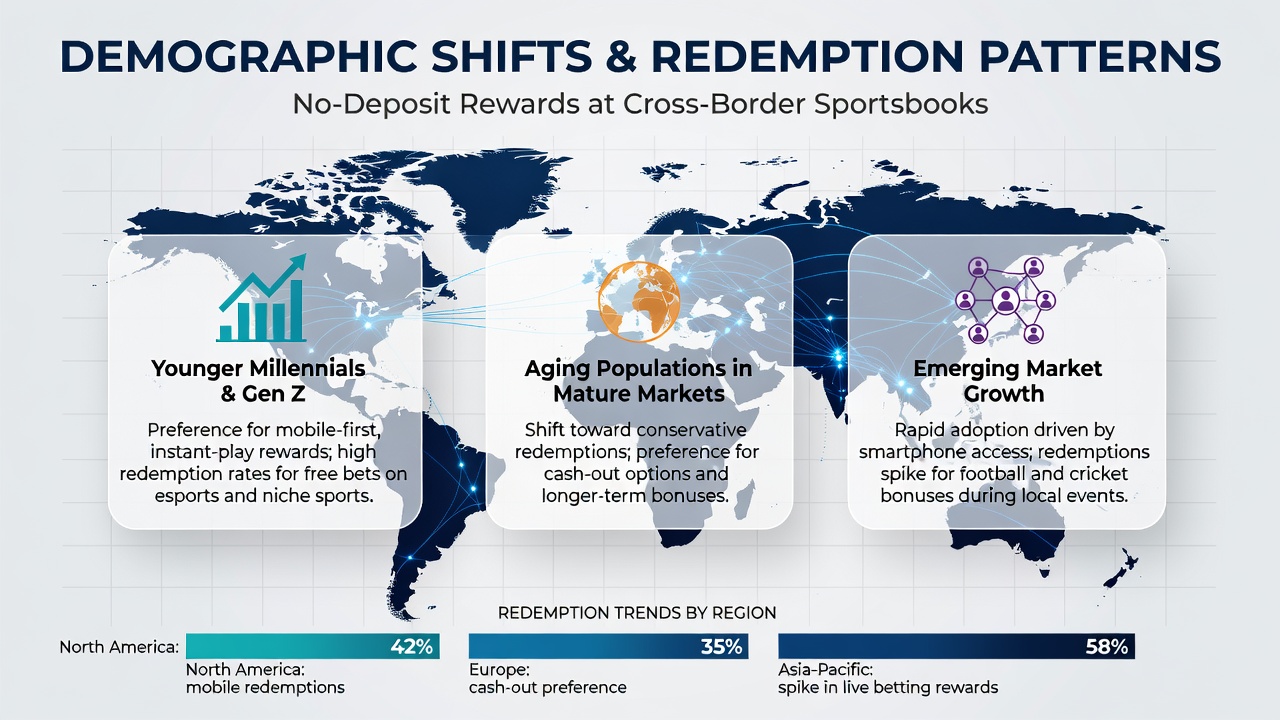
Cross-border sportsbooks have expanded rapidly in recent years, and demographic changes among users now shape how no-deposit rewards get redeemed across multiple jurisdictions. Younger bettors aged 18 to 34 tend to claim these bonuses through mobile apps at higher rates than older groups, while migration patterns bring new user bases from regions with varying regulatory environments. Data collected through operator platforms in October 2026 shows that redemption rates differ by location, with users in high-mobility corridors between Canada and the United States converting free bets more quickly than those in slower-adopting markets.
Age-Based Variations in Bonus Engagement
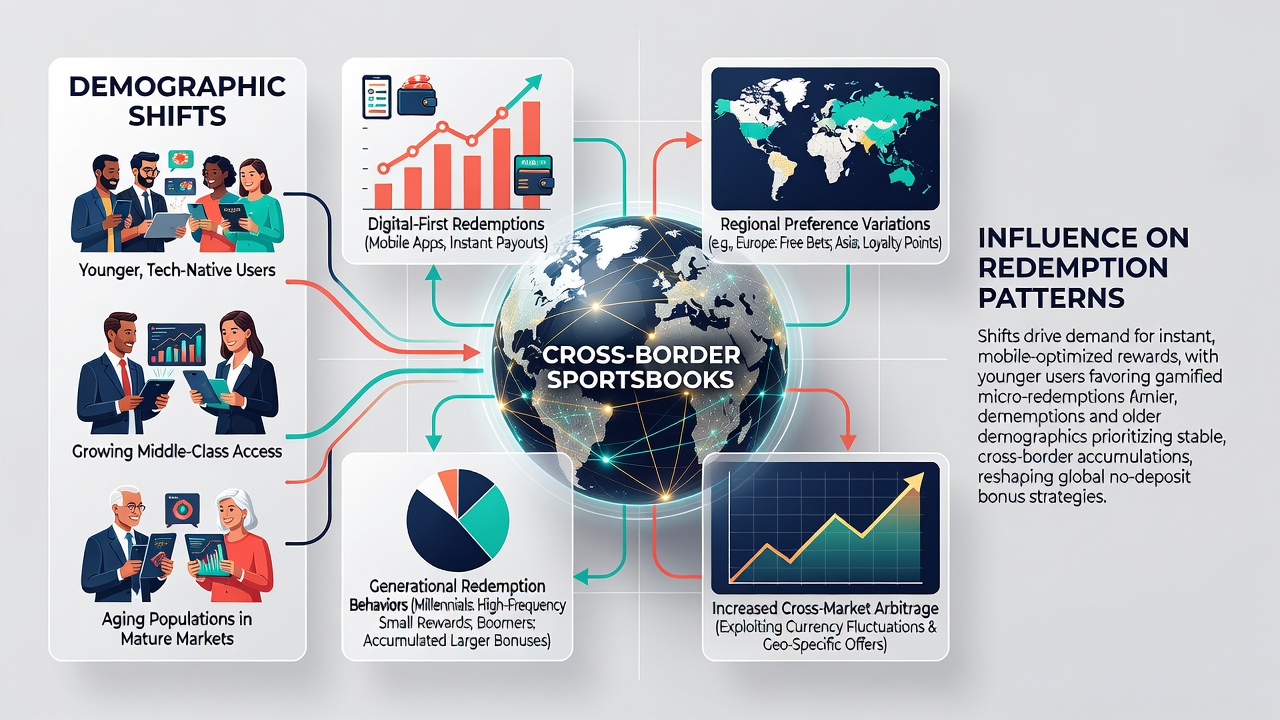
Millennials and Generation Z participants interact with no-deposit offers through digital wallets and instant verification tools, whereas users over 55 often complete redemptions via desktop interfaces and take longer to meet wagering thresholds. Studies from the Australian Gambling Research Centre indicate that age cohorts born after 1990 complete initial playthrough requirements within the first 48 hours at rates 30 percent higher than those born before 1970, largely because mobile notifications prompt action. Operators adjust bonus expiration windows accordingly, shortening time limits for younger demographics while extending them for older segments to maintain balanced participation across platforms.
Geographic Mobility and Cross-Border Redemption Flows
Population movements between countries create distinct patterns, as expatriates and frequent travelers access sportsbooks licensed in one jurisdiction while residing in another. Canadian users crossing into US markets during the 2026 NFL season redeemed no-deposit rewards tied to European leagues at elevated volumes, driven by time zone differences that favor evening matches. Regulatory filings from the Malta Gaming Authority document similar trends among EU residents who maintain accounts with operators based in multiple member states, noting that address verification updates occur more frequently among this group and influence bonus eligibility checks.
Income Levels and Cultural Factors at Play
Higher-income users from urban centers in North America and Australia tend to treat no-deposit rewards as low-risk entry points for testing new markets, often combining them with existing deposit-funded accounts, while middle-income groups in emerging Asian markets focus on single-bet redemptions to minimize exposure. Cultural attitudes toward gambling also surface in the data, with collectivist societies showing preference for rewards that can be shared or transferred through family accounts, although most operators prohibit such features. Figures released in October 2026 by regional gaming commissions reveal that these preferences lead to lower overall conversion rates in certain Southeast Asian corridors compared with North American ones.
Technology Adoption and Platform Preferences
Smartphone penetration rates continue to drive differences, since users in countries with widespread 5G coverage complete identity checks for no-deposit rewards faster than those in regions with limited infrastructure. Cross-border operators respond by offering region-specific verification options, including e-wallet integrations popular in Latin America and biometric logins favored in parts of Europe. Research compiled by the Canadian Gaming Association shows that these adaptations increased redemption completion by 22 percent among mobile-first demographics during the first three quarters of 2026.
Regulatory Influences on Shifting User Bases
Licensing rules in different jurisdictions affect which demographic groups can access no-deposit promotions, since age verification standards and residency requirements vary. Operators licensed under multiple frameworks must segment offers to comply with local laws, resulting in targeted campaigns that align with the predominant user profiles in each market. Data from October 2026 indicates that jurisdictions tightening residency rules saw temporary drops in cross-border redemptions among transient populations, while those relaxing digital verification saw gains among younger international users.
Conclusion
Demographic shifts continue to reshape how no-deposit rewards function within cross-border sportsbooks, with age, geography, income, and technology access creating measurable differences in redemption behavior. Operators monitor these patterns through platform analytics and adjust terms to match evolving user groups, while regulatory bodies track compliance across borders. As population dynamics evolve, the structure of these promotions adapts to maintain engagement across diverse markets.